For many individuals living with severe Post-Traumatic Stress Disorder (PTSD), the very symptoms that make them disabled, such as anxiety, avoidance, and fear of revisiting trauma, are the same factors that prevent them from seeking regular medical treatment. Unfortunately, to the Social Security Administration (SSA), a lack of recent medical records can sometimes appear to be a lack of impairment.
At Disability Law Group, we understand that silence in a medical file does not mean someone is cured. In many cases, it means the individual is struggling more than ever.
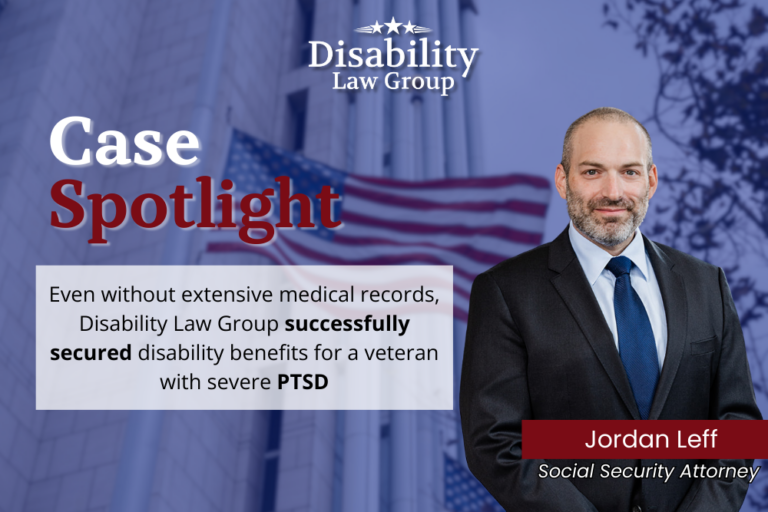
Recently, Disability Law Group attorney Jordan Leff successfully represented a 35-year-old military veteran in a Social Security Disability Insurance (SSDI) case that demonstrates how powerful personal testimony and strategic advocacy can be when medical records are limited.
The Challenge: Limited Medical Records in a PTSD Disability Claim
Our client, a veteran who previously worked as a retail stocker, had already been found disabled by the Department of Veterans Affairs due to severe PTSD. However, when he applied for Social Security Disability benefits, his case faced a significant challenge: extremely limited medical records during the relevant time period.
Because of the severity of his PTSD symptoms, the claimant experienced intense avoidance. He struggled to leave his home, avoided interacting with others, and often resisted seeking treatment because doing so required revisiting traumatic experiences.
In many disability cases, sparse medical documentation can lead to a denial. Our task was to demonstrate that his lack of treatment was not evidence of improvement. Instead, it was a direct symptom of his disabling mental health condition.
The Strategy: Letting the Client’s Story Be Heard
Knowing the medical file alone would not fully capture the severity of his condition, Jordan Leff focused on the most powerful evidence available: the claimant’s personal testimony.
The first step was building trust. Initially, the client was extremely nervous and hesitant to share details about his daily life and trauma. Through patient preparation and collaboration with both the claimant and his wife, Jordan developed a strategic approach to highlight the reality of his limitations.
The testimony focused on several critical areas:
- Identifying triggers: Clearly explaining the mental health triggers that made sustained employment impossible.
- Explaining treatment avoidance: Demonstrating how leaving the home or discussing traumatic experiences triggered severe anxiety and distress.
- Illustrating daily limitations: Painting a clear picture of how PTSD restricted the client’s ability to function socially, emotionally, and professionally.
A Favorable Decision at the Hearing
During the disability hearing, the claimant shared his story with honesty and courage. The preparation paid off. His testimony clearly demonstrated the severity of his condition and how PTSD prevented him from maintaining full-time employment.
The Administrative Law Judge (ALJ) was so persuaded by the testimony and evidence that he took the unusual step of informing Jordan Leff and the client during the hearing that he would be granting the claim.
Life-Changing Results for the Veteran and His Family
The favorable decision immediately changed the lives of the veteran and his family. The approval provided:
- Financial stability: Monthly disability benefits to help support daily living expenses.
- Access to Medicare: Ensuring healthcare coverage when the veteran is ready to pursue treatment.
- Peace of mind: Recognition that his service-connected mental health condition is real, serious, and deserving of support.
Attorney Insight: No Disability Case Is Hopeless
Attorney Jordan Leff reflected that while the client was initially reluctant to discuss the details of his condition, the support of his wife and careful preparation helped him share his story.
This case shows that many judges understand that the absence of treatment records can actually reflect the severity of a mental health condition. When the right evidence and testimony are presented, the truth can still be heard.
Why This Case Matters
If you or someone you love is struggling with PTSD or another invisible disability, it is important to know that limited medical records do not automatically mean you cannot qualify for Social Security Disability benefits.
This case highlights several important realities:
- Avoidance can be a symptom: Not seeking treatment may reflect the severity of a mental health condition.
- Personal testimony matters: Your story and the experiences of those who support you are powerful evidence.
- Experienced advocacy makes a difference: Strategic legal representation can help ensure your reality is understood.
We Are Here to Help
At Disability Law Group, we help veterans and individuals with mental health disabilities navigate the Social Security Disability process with compassion and experience. We understand the fear, anxiety, and uncertainty that often accompany these claims.
If you or someone you love is struggling to obtain Social Security Disability benefits, our team is here to help.
Contact Disability Law Group today to schedule a free consultation and learn how we can help you move forward.