MST VA disability claim victory with 100% permanent and total rating

Invisible Wounds. Undeniable Truth. 100% Justice: A VA Disability Victory for a Military Sexual Trauma Survivor

When veterans think about VA disability claims, a common misconception is that a lack of reporting at the time of an incident guarantees denial. This concern is especially common for survivors of Military Sexual Trauma (MST), who may carry the impact in silence for years, sometimes decades.

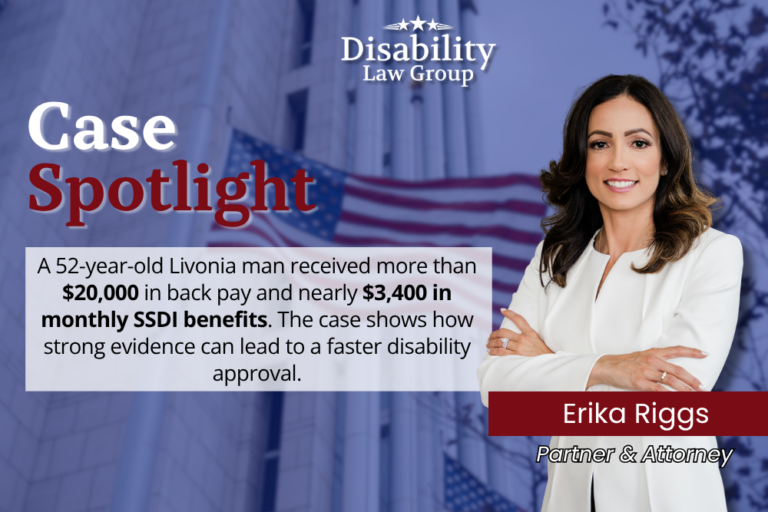
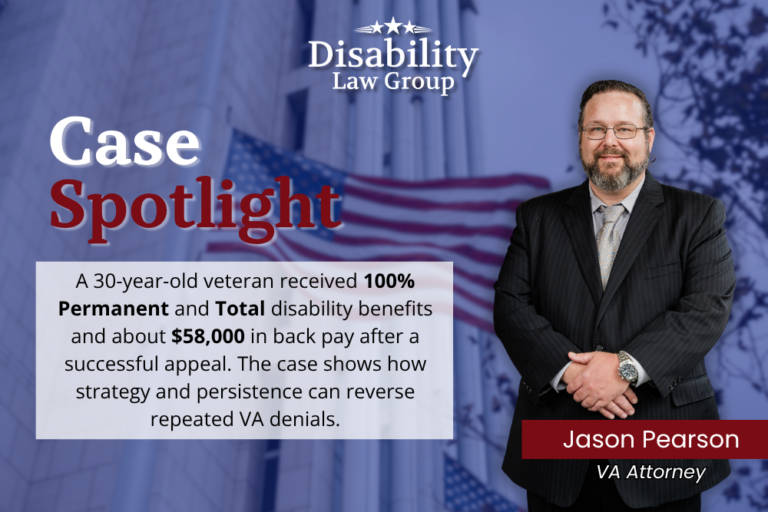
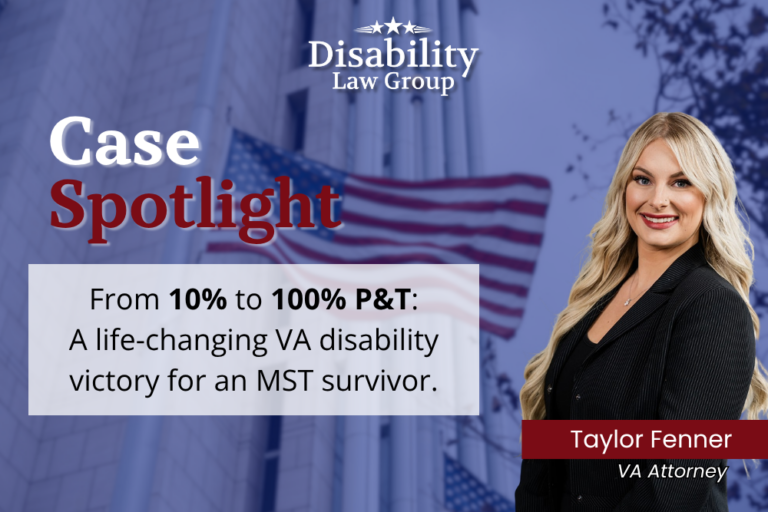
This case spotlight shows how strategic advocacy, a deep review of MST behavioral markers, and persistence through the appeals process helped a Navy veteran increase her VA disability rating from 10% to 100% Permanent and Total (P&T). If you are pursuing an MST VA disability claim, this case shows what can make the difference.

A decades-long fight for recognition and benefits

A 58-year-old Navy veteran from Michigan came to Disability Law Group after being repeatedly let down by the VA disability process. Despite severe PTSD related to MST, along with sleep apnea, migraines, and fibromyalgia, the VA rated her at only 10%.

The VA’s position was blunt: they claimed there was no evidence of an in-service stressor and no medical link, often called a nexus, between her current conditions and her military service. Because her formal treatment began years after discharge, the VA argued her claim lacked proof.

The strategy for an MST VA disability claim without a formal report

Disability Law Group Attorney Taylor Fenner approached the case with a clear understanding of why MST is frequently underreported. As Fenner explained, “Too many survivors suffer quietly for decades. When they are finally ready to share their story, they deserve to be believed and fiercely represented.”

DLG built a multi-layered legal strategy to overcome the VA’s “lack of evidence” argument:

  • Identifying MST behavioral markers: The team reviewed service treatment and personnel records for markers such as unexplained injuries, sudden medical visits, behavior changes, or shifts in duty performance. These markers can help support MST-related PTSD claims even when a formal report was never filed.
  • Strengthening the record with lay evidence: The claim was supported with detailed lay statements and medical context explaining delayed reporting. This helped demonstrate that silence is often a symptom of trauma, not an absence of it.
  • Establishing the nexus and secondary service connection: After securing service connection for PTSD, the team used that foundation to argue that other conditions, including obstructive sleep apnea, were secondary to PTSD and warranted VA disability compensation.

Escalating the appeal to a Higher-Level Review (HLR)

After a partial grant through a supplemental appeal, the fight was not over. The case was escalated to a Higher-Level Review (HLR). This step allowed the team to present focused legal and medical arguments to a senior VA reviewer, highlight errors in the prior decision, and demand a complete review of the marker evidence.

For many veterans, an MST VA disability claim is won at the appeal stage when the evidence is presented clearly.

Result: 100% P&T, Special Monthly Compensation, and $145,000 in back pay

The outcome was fully favorable. The VA acknowledged the veteran’s trauma and the severity of her conditions. The decision included:

  • 100% Permanent and Total (P&T) disability rating
  • Special Monthly Compensation (SMC-S) due to the combined impact of multiple service-connected disabilities
  • Over $145,000 in retroactive VA disability back pay, effective to the original claim date
  • Long-term security, including ongoing healthcare access and benefits that may extend to eligible dependents

For this veteran, the financial relief was life-changing. But the recognition mattered just as much: the VA finally acknowledged that what happened to her mattered.

Key takeaway: lack of reporting does not mean you cannot win

This case highlights important truths for veterans pursuing MST-related VA disability benefits:

  • A denial is not the end: Many strong cases are won through appeals, supplemental claims, or Higher-Level Reviews.
  • MST claims can be proven with markers: When a formal report is not available, the VA can consider behavioral changes and other indirect evidence.
  • Your story has weight: With the right legal strategy and evidence, “unprovable” claims can become successful claims.

We’re here to stand with you

MST and PTSD claims are deeply personal and deserve compassion, care, and experienced advocacy. If you or a loved one has been denied benefits, underrated by the VA, or needs help building an MST claim, Disability Law Group is here to help. An attorney can help strengthen an MST VA disability claim by gathering records, identifying markers, and building the nexus.

Contact us today to schedule a free consultation. We are proud to fight for those who have fought for us.

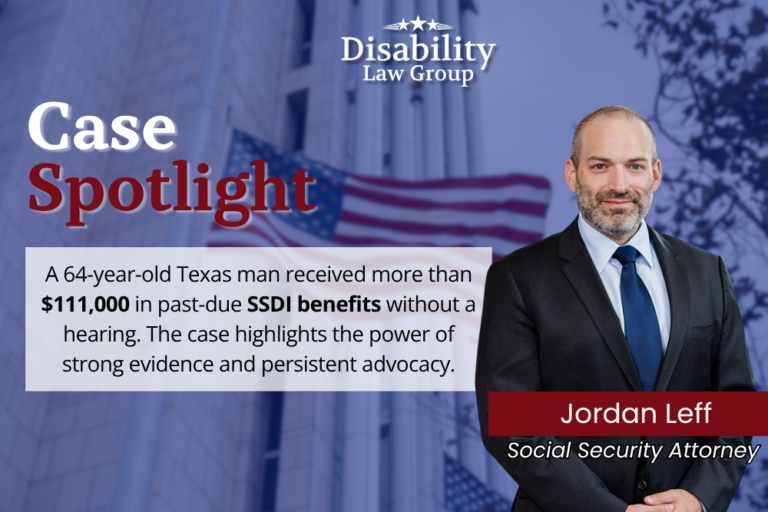
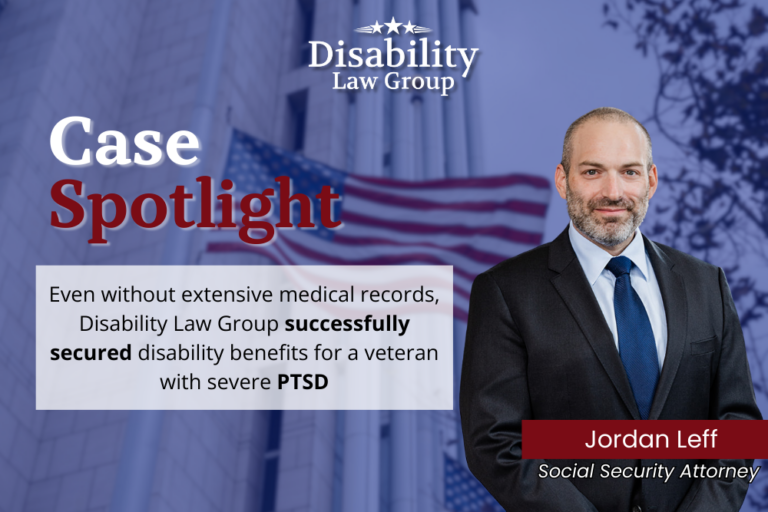
Case spotlight graphic featuring Jordan Leff and highlighting a veteran with severe PTSD who secured disability benefits despite limited medical records.

When Disability Is the Obstacle: Overcoming Sparse Medical Records to Win Social Security Disability Benefits

For many individuals living with severe Post-Traumatic Stress Disorder (PTSD), the very symptoms that make them disabled, such as anxiety, avoidance, and fear of revisiting trauma, are the same factors that prevent them from seeking regular medical treatment. Unfortunately, to the Social Security Administration (SSA), a lack of recent medical records can sometimes appear to be a lack of impairment.

At Disability Law Group, we understand that silence in a medical file does not mean someone is cured. In many cases, it means the individual is struggling more than ever.

Recently, Disability Law Group attorney Jordan Leff successfully represented a 35-year-old military veteran in a Social Security Disability Insurance (SSDI) case that demonstrates how powerful personal testimony and strategic advocacy can be when medical records are limited.

The Challenge: Limited Medical Records in a PTSD Disability Claim

Our client, a veteran who previously worked as a retail stocker, had already been found disabled by the Department of Veterans Affairs due to severe PTSD. However, when he applied for Social Security Disability benefits, his case faced a significant challenge: extremely limited medical records during the relevant time period.

Because of the severity of his PTSD symptoms, the claimant experienced intense avoidance. He struggled to leave his home, avoided interacting with others, and often resisted seeking treatment because doing so required revisiting traumatic experiences.

In many disability cases, sparse medical documentation can lead to a denial. Our task was to demonstrate that his lack of treatment was not evidence of improvement. Instead, it was a direct symptom of his disabling mental health condition.

The Strategy: Letting the Client’s Story Be Heard

Knowing the medical file alone would not fully capture the severity of his condition, Jordan Leff focused on the most powerful evidence available: the claimant’s personal testimony.

The first step was building trust. Initially, the client was extremely nervous and hesitant to share details about his daily life and trauma. Through patient preparation and collaboration with both the claimant and his wife, Jordan developed a strategic approach to highlight the reality of his limitations.

The testimony focused on several critical areas:

  • Identifying triggers: Clearly explaining the mental health triggers that made sustained employment impossible.
  • Explaining treatment avoidance: Demonstrating how leaving the home or discussing traumatic experiences triggered severe anxiety and distress.
  • Illustrating daily limitations: Painting a clear picture of how PTSD restricted the client’s ability to function socially, emotionally, and professionally.

A Favorable Decision at the Hearing

During the disability hearing, the claimant shared his story with honesty and courage. The preparation paid off. His testimony clearly demonstrated the severity of his condition and how PTSD prevented him from maintaining full-time employment.

The Administrative Law Judge (ALJ) was so persuaded by the testimony and evidence that he took the unusual step of informing Jordan Leff and the client during the hearing that he would be granting the claim.

Life-Changing Results for the Veteran and His Family

The favorable decision immediately changed the lives of the veteran and his family. The approval provided:

  • Financial stability: Monthly disability benefits to help support daily living expenses.
  • Access to Medicare: Ensuring healthcare coverage when the veteran is ready to pursue treatment.
  • Peace of mind: Recognition that his service-connected mental health condition is real, serious, and deserving of support.

Attorney Insight: No Disability Case Is Hopeless

Attorney Jordan Leff reflected that while the client was initially reluctant to discuss the details of his condition, the support of his wife and careful preparation helped him share his story.

This case shows that many judges understand that the absence of treatment records can actually reflect the severity of a mental health condition. When the right evidence and testimony are presented, the truth can still be heard.

Why This Case Matters

If you or someone you love is struggling with PTSD or another invisible disability, it is important to know that limited medical records do not automatically mean you cannot qualify for Social Security Disability benefits.

This case highlights several important realities:

  • Avoidance can be a symptom: Not seeking treatment may reflect the severity of a mental health condition.
  • Personal testimony matters: Your story and the experiences of those who support you are powerful evidence.
  • Experienced advocacy makes a difference: Strategic legal representation can help ensure your reality is understood.

We Are Here to Help

At Disability Law Group, we help veterans and individuals with mental health disabilities navigate the Social Security Disability process with compassion and experience. We understand the fear, anxiety, and uncertainty that often accompany these claims.

If you or someone you love is struggling to obtain Social Security Disability benefits, our team is here to help.

Contact Disability Law Group today to schedule a free consultation and learn how we can help you move forward.


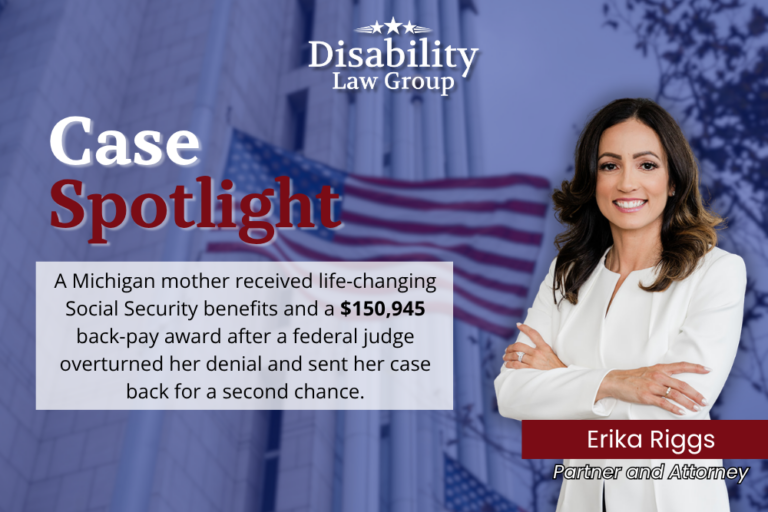
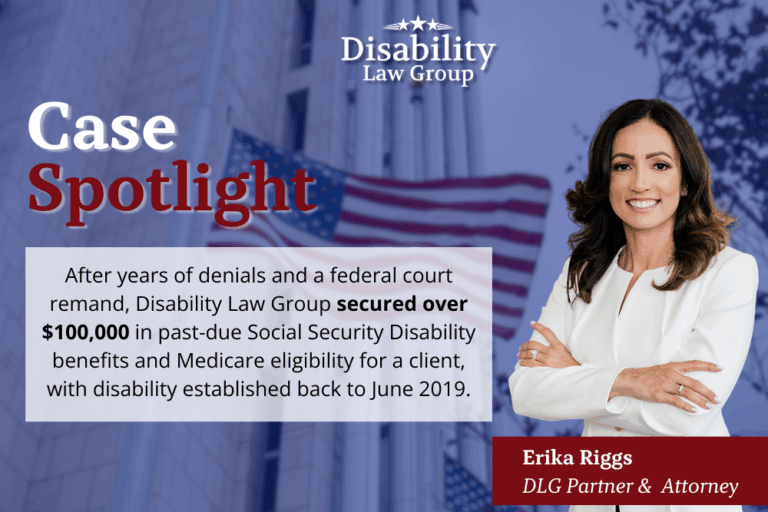
Case spotlight graphic showing Disability Law Group securing over $100,000 in past-due Social Security Disability benefits after a federal court remand.

Over $100,000 in Past-Due Social Security Disability Benefits After Federal Court Remand

When people think about Social Security Disability cases, they often assume approvals happen quickly or that a denial means the end of the road. This case shows just how inaccurate that assumption can be.

After years of denials, multiple appeals, and a federal court lawsuit, Disability Law Group helped a client from Warren, Michigan secure Social Security Disability benefits, immediate Medicare eligibility, and more than $100,000 in past-due benefits. Most importantly, the judge agreed that he had been disabled since June 2019, several years earlier than Social Security initially acknowledged.

A Long Road to the Right Outcome

Our client first applied for disability benefits in his mid-40s after years of worsening orthopedic and musculoskeletal conditions. Despite extensive treatment and clear functional limitations, his claim was denied at every level, including after his initial hearing.

By the time he contacted Disability Law Group, he was physically, emotionally, and financially exhausted. Even so, he remained determined to pursue the benefits he knew he deserved.

We took over the case and pursued every available appeal, first to the Appeals Council and then to the United States District Court. That decision ultimately changed the course of the case.

Federal Court: Where the Case Turned

The federal court judge agreed with our arguments and found that the prior Administrative Law Judge committed significant legal errors and failed to properly evaluate key medical evidence. The court ordered the case remanded for a new hearing, clearly stating that the prior analysis was flawed.

That remand allowed for a full and fair evaluation of the evidence, which ultimately resulted in a fully favorable decision.

Severe Orthopedic Conditions and Surgeries That Increased Limitations

This case involved severe bilateral knee pathology, combined with ankle, foot, and back impairments. The medical record showed extensive and ongoing limitations, including:

  • A scope procedure that worsened pain
  • A total knee arthroplasty
  • A subsequent right knee replacement scheduled for early 2024
  • Chronic instability and significant functional loss
  • Radiating symptoms into the left leg
  • Reliance on assistive devices
  • Difficulty remaining upright or stable

Despite this evidence, Social Security initially claimed he could still perform work, including sedentary work. We strongly disagreed and continued to fight for a decision that reflected the reality of his functional limitations.

Meeting and Medically Equaling Listing 1.18

One of the most critical arguments in this case involved Listing 1.18, which addresses major joint dysfunction. This listing requires evidence such as:

  • Chronic joint pain and stiffness
  • Abnormal motion or instability
  • Imaging confirming joint damage
  • A medically required two-handed, weight-bearing assistive device

We demonstrated that the combined impact of his knee, ankle, foot, and back impairments caused him to meet or medically equal Listing 1.18 well before his surgery date. We also established that his disability began in June 2019, not only after surgical intervention. The judge agreed with this analysis.

Why the Case Was Strong Even Without the Listings

Even beyond Listings 1.18, 1.15, and 1.16, this case clearly warranted approval at step five of the disability process, which evaluates whether a claimant can perform any work.

The evidence showed that:

  • He could not sit, stand, or walk for a full workday
  • He required frequent position changes
  • Pain significantly interfered with concentration and focus
  • He needed excessive breaks
  • Instability made sustained work unsafe

Based on these limitations, he could not perform any full-time work, including sedentary employment. The judge agreed so strongly that she did not call a vocational expert to testify, an uncommon and powerful outcome.

Fully Favorable Decision and Life-Changing Results

After reviewing the record and hearing testimony, the judge issued a fully favorable decision, finding the client disabled as of June 2019. As a result, he received:

  • More than $100,000 in past-due Social Security Disability benefits
  • Immediate eligibility for Medicare
  • Ongoing monthly disability benefits
  • Long-overdue financial stability

At the time of the final decision, the client was 50 years old, a factor that strengthened the case under Social Security’s vocational rules. However, the success of this case depended on proving disability well before he reached age 50, which allowed for a significantly larger award of retroactive benefits.

Why This Case Matters

This case highlights several critical truths:

  • A denial is not the end of the process
  • Federal court appeals can be successful
  • Judges must follow the law, and courts will enforce accountability
  • Severe orthopedic conditions often involve multiple joints and combined limitations
  • Disability determinations are based on functional ability, not just diagnoses

Most importantly, it demonstrates the value of working with an experienced disability law firm that understands medical listings, vocational rules, and federal court litigation.

We’re Here to Help

If you or someone you love has been denied Social Security Disability benefits, even after a hearing, do not give up. Many of our strongest cases are won on appeal, including at the federal court level.

At Disability Law Group, we handle disability claims nationwide and know how to build cases that withstand scrutiny from the initial application through federal court review. We are here to stand by your side and fight for the benefits you deserve. Book a free consultation here.

September Case Spotlight

Veteran Wins $550,000 in Retroactive Benefits After Decades-Long Fight

We are honored to share a recent victory that reflects exactly why we do this work. Disability Law Group Partner Mandy Kelly secured $550,000 in retroactive benefits for a Michigan veteran after taking his case to the Board of Veterans’ Appeals (BVA). After decades of delay and frustration, this veteran finally received the justice he deserved.

The Veteran’s Story

This veteran served from 1985 to 1986, during which time he survived a traumatic personal assault during training. The attack left him with both physical injuries and lasting psychological trauma.

In 1993 — nearly 30 years ago — he filed his first claim with the VA for “pain and stress” related to his service injury. At the time, he was already struggling with depression and taking antidepressants. Instead of fully developing the claim, the VA overlooked that he was clearly describing symptoms of PTSD and left his case unresolved.

Years passed. The veteran kept fighting, filing additional claims. Eventually, the VA granted service connection for PTSD, but they assigned the wrong effective date. This mistake cost him hundreds of thousands of dollars in benefits he had rightfully earned.

The Fight for Justice

The central issue came down to one question: when should his PTSD benefits have started? The VA argued for a much later date. Mandy Kelly argued that his original 1993 claim for “stress” was, in fact, a claim for PTSD.

Building the Case

Through tireless advocacy, Mandy Kelly built a compelling case by:

  • Presenting the veteran’s separation exam, which documented stress and nervousness as early as 1986.
  • Highlighting medical evidence from the early 1990s showing treatment for depression with antidepressants.
  • Arguing that the VA had a legal duty to sympathetically read the veteran’s claim under precedential case law, recognizing “stress” as a claim for psychiatric disability, even if not explicitly labeled as PTSD.

Her point was simple but powerful: when a veteran reports “stress” after a traumatic service experience, supported by medical evidence, the VA must recognize it as a psychiatric claim.

The Victory

The BVA agreed. They moved the effective date back to April 5, 1993 — exactly what had been sought. The outcome: $550,000 in retroactive benefits that this veteran should have received years ago.

This decision is not just about the financial relief, though that is life-changing. It is also about the VA finally acknowledging this veteran’s trauma and taking responsibility for their past mistakes.

Why This Matters

Every case we take on is personal. We are not just handling claims — we are standing beside people who served our country and were shortchanged by the system meant to protect them. This veteran waited 30 years for justice, but he never gave up. Neither did we.

Need Help with Your Case?

If the VA has denied your claim or assigned the wrong effective date, you do not have to face this alone. The attorneys at Disability Law Group know how to hold the VA accountable, and we are not afraid to take cases all the way to the BVA when necessary.

Contact Disability Law Group today at 1.800.838.1100 or click here to schedule your free consultation. Let our experienced attorneys be your voice and fight for the justice you deserve.

August Case Spotlight 2 2025

From Denied to Approved. A Life-Changing Social Security Disability Win in Cheboygan, Michigan

At Disability Law Group, every client matters. We know how overwhelming and frustrating it can feel to fight for the benefits you need, especially when the system seems determined to say no. Today, we are honored to share the story of one of our clients from Cheboygan, Michigan, whose perseverance, combined with our team’s advocacy, led to a life-changing Social Security Disability win.

A Complex Medical Journey

Our client, a 42-year-old woman, has been living with multiple serious health conditions for years. Each condition alone would make full-time work nearly impossible. Together, they created daily challenges that took a heavy toll on her body, her independence, and her hope.

Her diagnoses included:

  • Degenerative Disc Disease of the Lumbar Spine – severe back pain, stiffness, and limited mobility.
  • Chiari Malformation Type 1 (status post decompression surgery) – causing debilitating headaches, neck pain, and balance issues.
  • Frequent, Severe Headaches – requiring rest in a quiet, dark space for relief.
  • Bilateral Carpal Tunnel Syndrome – with numbness, tingling, and weakness in both hands.
  • Ehlers-Danlos Syndrome – leading to joint instability, fatigue, and chronic pain.
  • GERD (Gastroesophageal Reflux Disease) – frequent flare-ups worsened by stress and medication.

Day after day, she faced physical pain, emotional stress, and financial strain, while the benefits she desperately needed remained out of reach.

Multiple Denials Before Finding the Right Help

Like so many people, she started her disability application with hope. But despite the seriousness of her conditions, her claim was denied again and again; at the initial level, at a hearing before an Administrative Law Judge (ALJ), and even by the Appeals Council.

After years of fighting, she nearly gave up. Her previous law firm explained they did not handle federal court appeals and referred her to Disability Law Group for another look. That referral became the turning point in her case.

DLG’s Strategic Approach: A True Team Effort

When we took on her case, we didn’t just review what had already been submitted, we rebuilt it. Attorney, and co-founding partner, Erika Riggs, thoroughly reviewed every piece of medical evidence, uncovered critical information that hadn’t been properly emphasized, and helped prepare new evidence to strengthen her claim. This included updated medical records and detailed supporting statements addressing the severity of her symptoms and the impact on her ability to function.

Mrs. Riggs filed a comprehensive Motion for Summary Judgment in federal court and later a Reply Brief, backing up every argument with medical facts, legal precedent, and vocational evidence. We even appeared for oral argument before a U.S. District Judge, an opportunity rarely granted, and one we used to advocate powerfully on her behalf.

A Federal Court Victory and a New Hearing

The federal court agreed with our arguments and remanded the case back for a new hearing, this time with us by her side.

At the new hearing, Erika presented her full story clearly and convincingly, supported by updated medical documentation and detailed legal analysis. We also cross-examined the Vocational Expert (VE) and emphasized how her conditions impacted her ability to maintain any job—not just the ones she previously held.

The ALJ agreed, finding that:

  • Our client’s pain and fatigue would cause her to be off-task at least 20% of the workday, in addition to regular breaks.
  • She would likely miss at least two full workdays per month due to doctor visits, flare-ups, and fatigue.
  • These limitations, each on their own, were deemed work-preclusive by the VE.

A Hard-Earned and Life-Changing Win

After nearly a decade of waiting and fighting, our client was finally found fully disabled under Social Security’s rules, with her disability dating back to January 2015. She was awarded:

  • More than six years of past-due SSD benefits
  • Monthly ongoing benefits
  • Medicare eligibility
  • A total recovery of over $95,000

This decision didn’t just bring financial relief, it brought her peace of mind and the recognition she had fought so long to receive.

Why This Win Matters

This kind of outcome is exceptionally rare, federal court remands are challenging to secure, and even more rare is a favorable decision following that remand. Many firms don’t take cases to federal court at all. But at Disability Law Group, we don’t back down when our clients need us most.

We are proud to have given this deserving woman her day in court and even prouder to see her finally receive the benefits and peace of mind she deserves.

Are You or a Loved One Facing a Disability Denial?

Whether you are just beginning the disability process or you’ve been denied, even after a hearing or appeal, we can help. At Disability Law Group, we handle every stage of the process, including federal court appeals, and we bring both skill and compassion to every case we take on.

Contact us today for a free consultation. Let us put our experience to work for you, so you can focus on what matters most: your health, your family, and your future.

July Case Spotlight 2 2025

Full Victory for Disabled Veteran with PTSD and Back Injury

We are proud to share a recent victory on behalf of our client, a veteran of the United States Air Force from Garden City, Michigan, who has now been found disabled under the Social Security Act as of October 1, 2019.

Our client, who honorably served in Kuwait and was discharged in 2014, suffers from multiple severe impairments including post-traumatic stress disorder (PTSD), generalized anxiety disorder, major depressive disorder, and degenerative disc disease of the lumbar spine. These conditions significantly interfered with his ability to function in daily life and perform even simple work tasks.

He faced serious limitations in both physical and mental domains, reporting chronic back pain, nerve damage in his dominant hand, and difficulty with basic tasks like standing, sitting, or using a cell phone due to cramps and fatigue. Mentally, he experienced frequent panic attacks, memory impairment, depressed mood, and intrusive thoughts related to his military trauma.

Despite his 100% Permanent & Total (P&T) VA service-connected disability rating for PTSD and depression, the Social Security disability process presented unique challenges. While this VA rating helped expedite the claim under SSA’s rules, an expedited review does not guarantee approval. SSA applies different legal standards and must still evaluate how the individual meets or equals its own medical listings.

In our client’s case, the SSA considered listings for PTSD and other mental health conditions. Even though the claimant did not fully meet or medically equal a specific listing, our team demonstrated that at Step 5 of the evaluation process, his impairments were so severe that he could not perform any work in the national economy, making him eligible for benefits based on residual functional capacity (RFC).

At the hearing, the Administrative Law Judge (ALJ) carefully reviewed extensive medical records, VA findings, and testimony from both the claimant and a vocational expert. The ALJ issued a fully favorable decision, finding our client disabled. He will now receive long-overdue Social Security benefits, retroactive to the onset of his disability in 2019.

This case underscores the importance of thorough documentation, consistent treatment, and skilled legal advocacy, especially for veterans navigating both VA and SSA systems. At Disability Law Group, we are proud to serve those who have served and ensure they receive the benefits they have earned.

July Case Spotlight 2025

$96,632 Awarded for Disabled Widow in Royal Oak, Michigan

Losing a spouse is one of the most devastating experiences anyone can go through. But for our client – a 53-year-old woman from Royal Oak, Michigan – the grief didn’t stop there. Already struggling with serious health issues, she suddenly found herself facing the future alone, without income, and unable to work due to her disabilities.

When she came to Disability Law Group, she was overwhelmed and not sure where to turn. Like most people do, she asked Google which attorney would be best to help her with her disability case, and, thankfully, landed on Disability Law Group. She knew she didn’t want to go at this alone anymore.

Her list of diagnoses was long and complex, including:
Sleep Apnea, Fibromyalgia, Post-Traumatic Stress Disorder (PTSD), Chronic Fatigue, Anxiety, Depression, Attention-Deficit/Hyperactivity Disorder (ADHD), Asthma, Hashimoto’s disease (a chronic thyroid condition), Osteoarthritis with erosion in both hands, Scoliosis, a Bulging Disc, Insomnia, and Undifferentiated Connective Tissue Disease. On top of all that, she had survived a heart attack (STEMI)—a serious cardiac event that made recovery even more difficult.

Despite the severity of her symptoms, she wasn’t eligible for Social Security Disability Insurance (SSDI) based on her own work record. That’s when our team stepped in and identified a different, often misunderstood, path to benefits: Disabled Widow’s Benefits (DWB).

What Are Disabled Widow’s Benefits (DWB)?

Disabled Widow’s Benefits (DWB) are a special type of Social Security benefit that allows a disabled surviving spouse to draw benefits off of their deceased spouse’s earnings record, rather than their own. Many people don’t even realize this is an option—but for individuals who did not work enough to qualify for SSDI themselves, DWB can be life-saving.

To qualify for DWB, an individual must:

  • Be at least 50 years old;
  • Have a disability that began before or within 7 years of their spouse’s death (if between ages 50 and 60, as you do not have to prove disability if you are over the age of 60);
  • Be unmarried; and
  • Be the surviving spouse of a worker who was fully insured under Social Security.

In this case, our client met all the requirements—and more. She was battling both physical and mental impairments that interfered with every aspect of daily life. Getting approved would not only provide her with monthly financial support, but also Medicare coverage, which was critical for accessing the care she needed – from continuing to see her specialists as well as cover medications and treatment.

How Disability Law Group Won Her Case

At DLG, we leave nothing to chance. Our legal strategy is always tailored, detailed, and aggressive when it needs to be. No two cases are the same, just like no two people are the same. For this case, the road to success was carefully mapped out by our legal team and executed step-by-step.

Here’s what we did:

✅ Collected & Organized Every Relevant Medical Record

We obtained complete medical documentation from every treating provider. With conditions like hers, it was important to show the longitudinal history—not just a list of diagnoses, but a consistent pattern of treatment, limitations, and attempts to manage her symptoms. From sleep studies and imaging for her disc issues and scoliosis, to rheumatology notes and mental health records, we built a full picture of how disabling her conditions truly were.

✅ Obtained a Detailed Medical Source Statement (MSS) from Her Doctor

We worked closely with her treating physician to secure a Medical Source Statement (MSS)—a powerful tool that clearly outlined her functional limitations. The form addressed her inability to sit or stand for extended periods, the impact of her fatigue and widespread pain, and—critically—the need for frequent rest periods and daily naps, which alone would eliminate all competitive employment among other symptoms and significant limitations she has.

✅ Documented Medication Side Effects Using Both Records & Literature

Our client was prescribed a long list of medications, including Escitalopram, Levothyroxine, Cyclobenzaprine, Clonidine, Amphetamine Salts, Wegovy, Zyrtec, and low-dose aspirin—each with the potential for side effects such as drowsiness, fatigue, dizziness, and cognitive slowing. We documented not only her reported symptoms, but also cited medical literature and FDA warnings that confirmed these effects. This helped connect the dots between her prescriptions and her inability to sustain full-time work.

✅ Drafted a Comprehensive Legal Brief & Prepared for Hearing

We submitted a fully developed brief to the judge before the hearing, laying out our legal argument, citing regulations and case law, and emphasizing how her combination of impairments—particularly the fatigue and cognitive side effects—prevented her from maintaining any gainful employment. We included a timeline of her medical history, outlined the DWB requirements she met, and previewed the key arguments and evidence.

✅ Thoroughly Prepared Our Client for Hearing

Hearing day can be intimidating, especially for someone with anxiety, depression, and PTSD. We took the time to prepare her extensively, walking her through the types of questions to expect and helping her explain, in her own words, how her daily life is impacted. This included examples like how long she can stand before needing to sit, how fatigue forces her to nap after taking medication, and how pain in her hands limits her ability to type or hold objects.

✅ Cross-Examined the Vocational Expert (VE)

At the hearing, we cross-examined the Vocational Expert (VE)—a specialist who testifies about available jobs someone can do based on their limitations. When we asked whether someone who needs to nap daily or take multiple unscheduled breaks could work, the VE testified clearly: “No, that would be work preclusive.” That moment helped seal the case.

✅ Delivered a Clear & Compelling Argument Before the Judge

Our attorney presented a strong closing argument to the Administrative Law Judge (ALJ)—one we’ve appeared in front of many times before. The judge was familiar with our legal team’s thoroughness, and after hearing our client’s testimony, the VE’s credentials and disabling testimony, and reviewing our records and legal brief, he agreed. The decision was fully favorable.

The Outcome

Our client was awarded $96,632 in retroactive benefits—a monumental win that reflects not just the lost income from years of disability, but also the validation she deserved. Most importantly, she now has ongoing financial support and Medicare coverage, giving her access to the treatments, medications, and providers she needs moving forward.

For someone who had spent years feeling dismissed and overlooked—both medically and legally—this approval brought not only relief, but much deserved justice.

When Grief and Disability Collide, You Deserve a Legal Team That Fights for You

At Disability Law Group, we know how overwhelming it can be to navigate the Social Security system—especially after the death of a loved one. If you’re over age 50, disabled, and lost your spouse, you may qualify for Disabled Widow’s Benefits, even if you never worked enough to qualify on your own.

We’ve helped thousands of clients across Michigan and beyond—just like this woman from Royal Oak—win life-changing benefits with dignity and compassion.

Call us today or visit DisabilityLawGroup.com for your free consultation. We’re here to listen. We’re here to help. And we’ll be with you every step of the way.

June Case Spotlight

How Disability Law Group Secure SSD Benefits for a Client with Peripheral Neuropathy After Multiple Denials

At Disability Law Group, we know that the path to Social Security Disability (SSD) benefits is rarely straightforward, especially for individuals living with progressive neurological conditions. Attorney Farrah Abona had the honor of representing a 35-year-old client from Highland Charter Township, Michigan, who had faced years of job loss, health decline, and denied claims before finally receiving the support he deserved. Here’s how we helped him turn his case around.

The Struggles Before Disability Law Group

Our client, a former aviation operations assistant, had spent years trying to stay employed despite worsening health. Diagnosed with Charcot-Marie-Tooth disease, peripheral neuropathy, and bilateral foot drop, he experienced frequent balance issues, trouble with his hands, and the need for mobility aids like a cane and walker. Despite his persistence, the progression of his impairments led to repeated layoffs.

Adding to the complexity of his situation, our client had filed several EEOC complaints against past employers due to discriminatory treatment stemming from his disability. While he reached settlements in these cases, the resulting lump sum payments—combined with sporadic short-term jobs—created confusion for the Social Security Administration (SSA). His earnings record appeared inconsistent, and these deposits were often misinterpreted as substantial income, overshadowing the fact that he was never able to maintain gainful, full-time work.

After being denied at both the initial application and reconsideration stages, our client turned to DLG for help.

DLG’s Strategy: Untangling Complex Evidence & Making the Right Argument

Attorney Farrah Abona took a thorough and strategic approach to the case, beginning with a detailed analysis of the client’s earnings history. She carefully distinguished between EEOC settlement payments and minimal earned income, organizing and submitting documentation that clarified the source of each deposit. This step was critical in ensuring the Social Security Administration (SSA) understood the true financial picture.

To further strengthen the disability claim, Farrah compiled and submitted key supporting evidence, including:

  • A Medical Source Statement from the client’s treating physician outlining his inability to walk without assistance, difficulties with balance and hand coordination, and limitations in daily functioning.
  • Medical records from his treating doctors that supported the progressive nature of his neurological condition.
  • Work notes from his treating provider documenting serious safety concerns tied to his conditions.

Most importantly, Farrah developed a strong legal argument under Listing 11.14 for Peripheral Neuropathy, clearly demonstrating that the client’s symptoms met the Social Security Administration’s (SSA) criteria for this listed impairment. Because her written brief and legal analysis were so compelling, the judge required no additional medical expert testimony. Instead, he proceeded directly to the Vocational Expert, who confirmed that, based on the severity of the client’s limitations, no work would be available—leading to a fully favorable outcome.

The Outcome: A Fully Favorable Decision That Changed Everything

Attorney Abona presented the full scope of the client’s functional limitations and clarified the earnings inconsistencies that had contributed to earlier denials. Her in-depth Listing 11.14 analysis, which she had walked through carefully with the client ahead of time, supported a strong case that led to full SSD approval.

Learn more about How a Lawyer Can Help You Prepare for a Disability Hearing

The Administrative Law Judge (ALJ) issued a fully favorable decision, granting our client SSD benefits, finally recognizing how significantly his health conditions limited his ability to work. After years of setbacks, he finally felt seen and understood—grateful for the advocacy that made this outcome possible.

In addition to his ongoing monthly benefits, the client received more than $13,000 in retroactive backpay, covering the period back to August 25, 2023, a financial lifeline that brought immediate stability. He is also set to become eligible for Medicare coverage by the end of the year, ensuring continued access to the care he needs moving forward.

Why This Case Matters

This case is a powerful example of how legal advocacy can make a life-changing difference. The SSD process isn’t built for simplicity, especially when you’re dealing with unusual income sources or complex health conditions. With the right legal support, you don’t have to face it alone.

At Disability Law Group, we go the extra mile for every client, no matter how challenging the case.

Denied SSD Benefits or Feeling Misunderstood?

If you’ve been denied Social Security Disability or feel like the system isn’t hearing you, you’re not alone—and you don’t have to go through this process by yourself.

Let us stand by your side and fight for the benefits you deserve.

Case spotlight may 2025 - Taylor Fenner

Surviving Spouse of Vietnam-Era Veteran Secures Justice and Life-Changing Benefits

At Disability Law Group, we are committed to standing up for veterans and their families—especially when they’ve been unfairly denied the benefits they’ve rightfully earned. Recently, attorney Taylor Fenner had the honor of representing the surviving spouse of a Vietnam-era veteran whose claim for survivor benefits had been repeatedly denied by the VA. The veteran passed away due to arteriosclerotic heart disease, yet the VA refused to recognize the condition as service-connected. After a meticulous review of the veteran’s service records, Taylor Fenner uncovered critical evidence that ultimately changed everything. Here’s how we made a life-saving difference for this deserving widow.

The Struggles Before Disability Law Group

For years, the surviving spouse of the veteran had been fighting for Dependency and Indemnity Compensation (DIC) benefits after her husband’s passing. The VA continuously denied her claims, stating that the veteran’s death was not caused by a service-connected condition. Adding to her frustration, the VA also claimed there was no proof the veteran served in Korea or had been exposed to herbicides such as Agent Orange.

Desperate for help and unsure of where to turn, the widow contacted Disability Law Group. Attorney Taylor Fenner immediately stepped in, determined to get to the truth and fight for the benefits this surviving spouse was so unjustly denied.

Breaking Down the Key Issues

  1. Proving Service in Korea Near the DMZ

The cornerstone of the VA’s denial was their assertion that the veteran had no service in Korea and therefore could not have been exposed to herbicides like Agent Orange. Taylor Fenner knew this assumption needed to be challenged.

After a lengthy and detailed review of the veteran’s service records, Taylor discovered a single crucial document showing that the veteran was stationed at Camp Kaiser in April 1968. Camp Kaiser is located just 14 miles from the Korean Demilitarized Zone (DMZ), and VA regulations clearly state that veterans who served in or near the DMZ between September 1, 1967 and August 31, 1971 are presumed to have been exposed to herbicides.

This documentation was the breakthrough that changed the case. By proving that the veteran served at Camp Kaiser during the qualifying period, Taylor successfully argued that Camp Kaiser qualifies as in or near the DMZ and therefore, the veteran should be presumed to have been exposed to Agent Orange during his military service.

  1. Establishing Service Connection for Cause of Death

With exposure to Agent Orange now conceded, the next step was linking the veteran’s cause of death—arteriosclerotic heart disease—to his military service. Arteriosclerotic heart disease is among the conditions the VA presumes to be related to herbicide exposure.

Taylor presented compelling medical and regulatory evidence showing that the veteran’s death was directly related to his presumed herbicide exposure. As a result, the VA finally recognized that the veteran’s death was service-connected, qualifying the surviving spouse for DIC benefits.

  1. Securing Retroactive Benefits Back to 2019

Taylor didn’t stop at securing monthly benefits. She also fought to ensure the widow received every dollar she was owed in backpay. By showing that the original claim had been continuously pursued since 2019, Taylor successfully secured retroactive benefits dating back to that year—resulting in a lump sum payment of over $97,000.

The Outcome: Justice and Stability Restored

Thanks to Taylor Fenner’s diligence and determination, the surviving spouse was awarded:

  • Service Connection for Cause of Death
  • Retroactive Benefits Dating Back to 2019
  • Over $97,000 in Backpay
  • Ongoing Monthly DIC Payments for Life

When Taylor informed her of the VA’s decision, the client broke down in tears. Through sobs of relief, she said, “You have not only changed my life, but you have saved my life.”

Why This Matters to You

This case is a powerful reminder that even when the VA says “no,” that’s not the final word. Veterans and their families deserve a legal team who will fight relentlessly to uncover the truth and secure the benefits they’ve earned. Whether you’re a surviving spouse seeking DIC benefits or a veteran denied a rightful service connection, the Disability Law Group is here to help.

If you or a loved one are facing a similar struggle, contact Disability Law Group today for a free consultation. Attorney Taylor Fenner and our experienced legal team are ready to stand by your side—just like we did for this brave widow—and help you secure the justice and peace of mind you deserve.

Case spotlight may 2025 - Erika Riggs

Rochester Woman Wins Back Her Lifeline — SSI & DAC Benefits Restored with Help from Disability Law Group

When your entire life depends on the benefits you fought so hard to receive—and they’re suddenly taken away—what do you do?

This is exactly what happened to our client, a 28-year-old woman from Rochester, Michigan, who was caught off guard when the Social Security Administration (SSA) suddenly terminated both her SSI (Supplemental Security Income) and DAC (Disabled Adult Child) benefits. It wasn’t just a paperwork issue—it was a life-altering event that threatened her health care, financial stability, and independence.

She came to Disability Law Group (DLG) scared and unsure of what to do next. She left with her benefits restored, her dignity protected, and her future intact.

Understanding the Benefits: Why DAC Matters

Let’s start with some background—because most people don’t even realize DAC benefits exist until they’re told about them.

Disability Law Group (DLG) benefits are a form of Social Security Disability Insurance (SSDI) that adults with disabilities can qualify for based on a parent’s work record—not their own. That means even if someone has never been able to work due to a disability that began before age 22, they can still receive SSDI benefits if a parent is retired, disabled, or deceased.

What makes DAC benefits so powerful?

  • They’re not income- or asset-restricted like SSI
  • Recipients can qualify for Medicare, not just Medicaid
  • DAC can be received in addition to or instead of SSI

Our client had both: SSI to help cover basic needs and DAC benefits based on her father’s Social Security record. Together, these were her financial lifeline.

Then Came the CDR – And Everything Changed

Every so often, the SSA conducts something called a Continuing Disability Review (CDR) to determine if a person still qualifies for disability benefits. These reviews can feel routine for some—but for many, they’re confusing, overwhelming, and, frankly, terrifying.

In our client’s case, the CDR resulted in a termination of both benefits. She received a letter saying she was no longer considered disabled. No explanation, no acknowledgment of the daily challenges she faces. Just a decision that could take away everything.

Learn more about CDRs and how to protect yourself by watching our DLG YouTube video.

She had already been diagnosed with endometriosis, generalized anxiety disorder, major depressive disorder, and a cognitive/learning disability that significantly affected her ability to function day to day. She had not gotten “better.” If anything, her impairments had continued to affect her in very real, very disabling ways.

But SSA didn’t seem to see that.

How DLG Took Action Immediately

When her family reached out to us at DLG, they were understandably shaken—but ready to fight. So were we.

First, we filed an immediate Request for Reconsideration, which is the first step in the appeal process for a CDR denial. We also ensured her Medicare coverage would continue during the appeal, and advised her family on how to protect her Medicaid in the meantime.

From there, we got to work on the most important part of the case: building the evidence.

What We Did:

  • Collected updated medical records from multiple providers
  • Highlighted her documented learning and cognitive impairments
  • Confirmed her disability began before age 22, making her eligible for DAC
  • Provided a thorough explanation of how her mental health and physical conditions impacted her daily functioning

At one point, SSA even suggested that the family obtain a new IQ evaluation from a private testing center—to the tune of nearly $3,000.

Instead of letting the family carry that burden, we stepped in and said, “Don’t worry. We’ve got this.”
We reviewed her previous psychological evaluations and compiled ample updated documentation to support her intellectual and cognitive limitations—without the extra cost.

SSA’s Mistakes — And Our Relentless Follow-Up

What made this case especially frustrating was that SSA made several major errors along the way:

  • They failed to include updated records in her case file
  • They overlooked crucial medical history
  • Important documents were mislabeled or lost
  • They nearly made a decision without a complete file

But thanks to the dedication of our legal team, we caught every single mistake before it was too late. We regularly:

  • Called SSA and the Disability Determination Services (DDS) office to check the file
  • Submitted corrections and resubmitted documents they failed to upload
  • Advocated directly with claims representatives to ensure her case was fairly reviewed

The Outcome: Benefits Reinstated, Life Stabilized

After months of persistence, advocacy, and attention to detail, SSA reversed its decision. Our client was found still disabled, and her benefits were fully reinstated.

She will continue receiving:

  • SSI, which helps cover essential daily expenses
  • DAC benefits, providing long-term financial support through SSDI
  • Medicare and Medicaid, ensuring she gets the health care she needs

This wasn’t just a win—it was the protection of her entire way of life.

Why This Case Matters

This story is one of many we see. People with real, lifelong disabilities are at risk of losing everything because of bureaucratic oversight, a lack of understanding, or just plain mistakes.

For adults with disabilities and their families, understanding the importance of DAC benefits, and how to fight back during a CDR, can be the difference between security and crisis.

At Disability Law Group, we don’t just handle paperwork—we step into our clients’ lives, understand what’s at stake, and fight with everything we’ve got.

💡 Need Help with a CDR or DAC Benefits?

If you or someone you love is facing a Continuing Disability Review, has been cut off from SSI or DAC, or simply needs guidance with the Social Security Disability process, don’t wait.

Let us fight for your benefits—just like we did for this incredible young woman from Rochester.

📞 Call today or visit us at DisabilityLawGroup.com
📍 Offices in Troy, Michigan – Serving clients throughout Michigan and nationwide
⚖️ Erika Riggs, Partner & Disability Attorney – Disability Law Group