When our client first came to Disability Law Group, she had already been told “no” more than once.
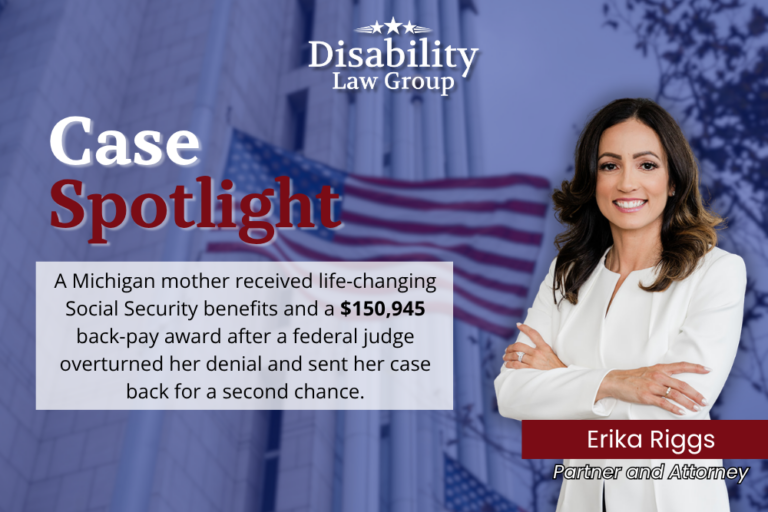
She was a 42-year-old mother from Cheboygan, Michigan, who had been fighting for Social Security Disability Insurance benefits since 2020. She had attended her hearing and trusted the process, but the judge denied her claim. When the Appeals Council declined to review her case, she felt like she had reached the end of the road.
Fortunately, a denial is not always the end. Sometimes, it means the case needs a different strategy, a deeper review, and a team willing to look closely at what may have been missed.
Can I Appeal a Social Security Disability Denial in Federal Court?
Yes. If your claim is denied by an Administrative Law Judge and the Appeals Council refuses to review it, you may have the right to file a lawsuit in United States District Court.
This is a highly specialized step in the Social Security Disability appeal process. It is not a new application, and it is not another standard hearing. Instead, the court reviews whether legal errors may have affected the outcome of the case.
At Disability Law Group, we understand how discouraging it can feel to receive multiple denials. But in some cases, Federal Court can open the door to a second chance.
Seeing What Others Missed
Our client was referred to us because her prior attorney did not handle federal appeals.
When we reviewed her file, we did not just see a denial. We saw a case where the evidence had not been fully connected to the severity of her limitations.
After carefully reviewing her medical records and hearing transcripts, it became clear that her impairments, including those connected to a 2015 motor vehicle accident, had not been meaningfully evaluated. Her symptoms were serious, ongoing, and life-changing, but the full picture had not been presented in a way that reflected how much her conditions affected her ability to work.
Disability Law Group filed a lawsuit in United States District Court. The federal judge agreed that the case needed another look and sent it back for a new hearing.
What Medical Conditions Were Involved in This Disability Case?
This case involved a complex medical history that included chronic migraines, cervical spine damage, and Chiari malformation.
With the opportunity for a new hearing, our team rebuilt the case from the ground up. We focused on telling the full story of how her conditions developed, worsened, and affected her ability to function day after day.
Chronic, Debilitating Migraines
Our client’s migraines were not simply occasional headaches. They were severe episodes that caused extreme sensitivity to light and sound, forcing her to lie down in a dark room for hours at a time.
For someone trying to maintain consistent work, symptoms like these can make it extremely difficult to stay focused, reliable, and present throughout a normal workday.
Cervical Spine Damage
Medical imaging confirmed disc bulging at C5-6 and C6-7. These issues contributed to pain, reduced mobility, and muscle weakness.
Even when a job is considered sedentary or office-based, a person may still need to sit for long periods, hold their head and neck in certain positions, focus on tasks, and maintain consistent attendance. Her physical limitations made those expectations increasingly difficult.
Chiari Malformation and Surgical Complications
Our client also underwent Chiari decompression surgery. Unfortunately, instead of providing the relief she had hoped for, she continued to experience serious symptoms, including increased vertigo and voice-related issues.
This part of her medical history helped show that her condition was not temporary or easily resolved. It was part of a larger, ongoing pattern of limitations that affected her daily life and ability to work.
Why Was the Date Last Insured Important?
One of the biggest challenges in this case was our client’s Date Last Insured, which was December 31, 2019.
For Social Security Disability Insurance, the Date Last Insured is an important deadline. Because Social Security Disability Insurance is based on work history and payroll taxes, a person generally must show that their disability began before their insured status expired.
In this case, that meant we needed to connect the medical evidence to the period before December 31, 2019.
Our team carefully built a timeline from the 2015 accident through the years that followed. We showed how her symptoms progressed and how her limitations became severe enough to prevent full-time work before her insured status ended.
How Did Federal Court Help This Client Get Another Hearing?
Federal Court gave this client another opportunity to have her case properly reviewed.
The court did not simply approve benefits on the spot. Instead, it recognized that there were issues in how the case had been evaluated and sent it back for a new hearing.
That second chance mattered.
At the new hearing, Disability Law Group was able to present the evidence more clearly, explain the medical timeline, and show how her conditions prevented her from sustaining the type of work she had done in the past.
The Result: $150,945 in Past-Due Benefits
After years of uncertainty, the judge agreed that our client was disabled.
She was awarded $150,945 in past-due benefits, along with ongoing monthly support for herself and her minor child.
For this Michigan mother, the outcome meant more than a financial award. It meant stability, relief, and the chance to move forward after years of fighting to be heard.
Every case is different, and past results do not guarantee future outcomes. But this case is an important reminder that a denial does not always mean the end of the road.
Why Strategy Matters in Social Security Disability Appeals
A strong disability appeal requires more than submitting records. It requires understanding the medical evidence, the legal standards, the work history, and the specific reasons a claim was denied.
In this case, strategy mattered because the original denial did not fully reflect the impact of our client’s conditions. By identifying what had been missed and taking the case to Federal Court, Disability Law Group helped create the opportunity for a new hearing and a fairer review.
For people who feel discouraged after a denial, this case shows why it can be important to have an experienced disability team review the file before giving up.
What Should You Do If Your Social Security Disability Claim Was Denied?
If your Social Security Disability claim was denied, do not assume that you are out of options.
Depending on where you are in the process, you may be able to request reconsideration, attend a hearing, ask for Appeals Council review, or pursue a Federal Court appeal. The right next step depends on your case history, your deadlines, and the reason for the denial.
Because deadlines can be strict, it is important to ask for help as soon as possible.
Disability Law Group Is Here to Help You Understand Your Options
Being denied benefits can feel overwhelming, especially when you are already dealing with pain, illness, financial stress, or uncertainty about the future. You deserve to have your case reviewed with care, attention, and respect.
At Disability Law Group, we help people with Social Security Disability claims at many stages of the process, including appeals and Federal Court cases. We take the time to understand the person behind the claim and the full story behind the medical records.
If you have been denied Social Security Disability benefits, contact Disability Law Group today for a free consultation. We can help you understand your options and decide what steps may be available in your case.
📞 (800) 838-1100
🌐 https://disabilitylawgroup.com/contact/
At Disability Law Group, every client matters.